How to Prepare Your AC for Summer: 10 Homeowner Tips
Homeowner Tips & News

Family Owned & Operated

Trusted & Highly Rated Service

Responsive & Timely Service
Family Owned & Operated
Trusted & Highly Rated Service
Responsive & Timely Service
How to Prepare Your AC for Summer: 10 Homeowner Tips
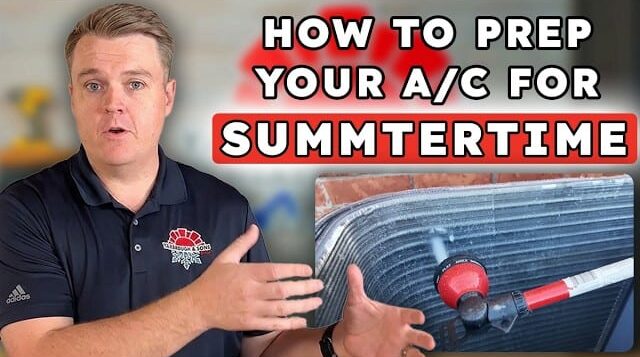
Spring is here, and summer is fast approaching. If you haven’t turned on your AC yet, it’s time to stop living in a “terrarium” and get your system ready for the heat. Jumping from zero to 6,000 RPMs on the first 95°F day is a recipe for a breakdown.
Follow this 10-point checklist to ensure your home is a sanctuary of cool air all summer long.
1. Change Your Filters
This is Homeowner 101. Trying to run your AC with a dirty filter is like trying to breathe through a cocktail straw—it’s exhausting for the system and will eventually kill it. Change your filters now to ensure your system can “breathe.”
2. Clean Around the Outdoor Unit
Winter likely left debris around your condenser. Sweep away leaves, sticks, and dust. Ensure you have at least 2 feet (24 inches) of clear space around the unit. Do not build retaining walls or store lumber against it; your condenser needs room to breathe to prevent high pressures and a dying compressor.
3. Check Your Thermostat Settings
It sounds simple, but many “broken” AC calls are actually just thermostats set to “Heat” or “Off.” Ensure your system is set to Cool and that your schedules are updated for the new season.
4. Inspect and Clear the Condensate Drain
Find where your drain line terminates. If you are a “pro” homeowner, find the PVC cleanout near your indoor unit, remove the cap, and use a shop vac to suck out any algae or sludge. This prevents a “sloppy mistake” where water leaks onto your floors or through your ceiling.
5. Inspect Electrical Boxes
Check the “disconnect box” (the small rectangle on the wall) next to your outdoor unit. Ensure it is firmly attached to the wall and hasn’t been knocked loose by a shovel or a storm. Do not open the box—just verify it is secure and not a physical hazard.
6. Dust the Return Registers
Dusty return grills are an eyesore and a magnet for more dirt. Take a duster to the grills to keep that loose dust out of your system. It improves the look of your home and extends the life of your filters.
7. Perform a “Soft Start”
Don’t wait until it’s 100°F to test the system. Turn it on when it’s 70°F outside. This gives the system a “warm-up” period and lets you spot issues before they become emergencies.
8. Inspect the Copper Line Insulation
Look at the two copper lines entering your house. The larger one should be encased in thick, black foam (Armaflex). Squirrels and raccoons love to steal this for their nests.
- The Fix: If the copper is exposed, buy some Armaflex and electrical tape at a hardware store. Insulate the lines separately—never wrap them together, as one is hot and one is cold!
9. Listen for “Odd” Noises
When you first start the system, listen for clanking, rattling, or loud electrical buzzing. These are the sounds of wear and tear and are early warnings that a component is failing.
10. Know When to Call a Pro
If your thermostat is flashing, you hear alarming noises, or the system simply won’t turn on, it’s time to call in the big guns. Never attempt to check refrigerant pressures yourself. Refrigerant is under high pressure and can cause severe freezer burns and system damage.
Conclusion: Don’t Wait for the Heatwave
Taking 30 minutes to run through this checklist can save you thousands in emergency repairs and keep you from fighting with your family when the house hits 85 degrees.
If you are in the Oklahoma City metro area, Yarbrough & Sons would love to be your home comfort team. If you’re elsewhere, find a reputable local pro with the “receipts” to back up their work.
Curious about what a repair might cost before you even call? Use our Online Estimate Tool to walk through the logic and see upfront pricing.

Proudly Serving Communities Throughout The Oklahoma City Area
Our Service Area
 All Service Areas