
Why Your HVAC Replacement Cost Has Nearly Doubled in the Last 4 Years
Homeowner Tips & News

Family Owned & Operated

Trusted & Highly Rated Service

Responsive & Timely Service
Family Owned & Operated
Trusted & Highly Rated Service
Responsive & Timely Service
Why Your HVAC Replacement Cost Has Nearly Doubled in the Last 4 Years
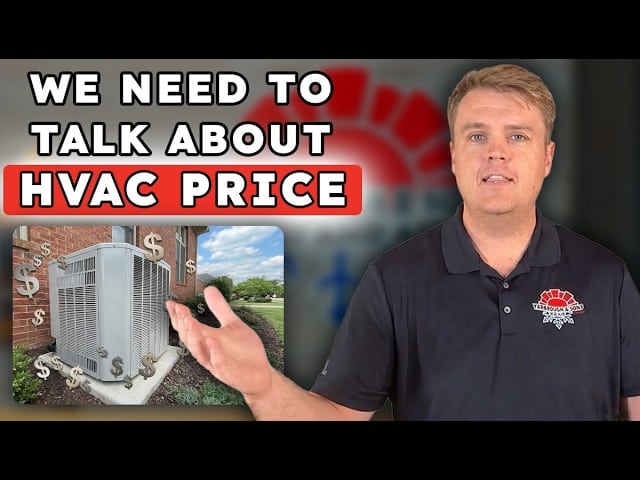
It is the hottest day of the year so far, and you are staring at a decision point. Your old air conditioner is struggling, you know hotter days are on the horizon, and you’ve started looking at pricing online. If you are feeling confused, you aren’t alone.
Let’s address the elephant in the room: the cost to replace a residential HVAC system has nearly doubled over the last 48 months.
Four years ago, the average ticket for a system replacement floated between $8,000 and $10,000. Today, in 2026, those same average tickets are landing between $13,000 and $16,000, depending on the size and efficiency tier you choose.
When a contractor hands you a quote like that, they usually catch the brunt of the frustration. But as your trusted home comfort guides, we want to give you a peek behind the curtain to show you exactly what has driven these numbers up—and how you can protect your wallet.
1. The Heavy Hitters: Government Tariffs and Mandates
The sharpest price increases have come from external supply chain and regulatory forces that contractors have no choice but to pass along.
Global Tariffs
Because the HVAC industry relies heavily on global logistics, recent tariffs have hit raw material costs hard. We have seen 15% to 50% tariff premiums tacked onto essential manufacturing components like steel, tin, and copper. Manufacturers have implemented seven to ten consecutive price hikes over the last few years, and those costs are locked in.
The EPA & The AIM Act Refrigerant Transition
Over the last couple of years, the Environmental Protection Agency (EPA) forced a massive manufacturing shift through the AIM Act. The industry has been transitioning away from the long-standing R-410A refrigerant to newer A2L alternatives like R-454B and R-32.
This wasn’t as simple as swapping out a fluid; factories had to spend billions of dollars retooling entire production lines to design systems capable of handling different operating pressures, specialized safety sensors, and updated rubber gaskets.
2. The Trade Labor Crisis
While material costs rose, the industry also ran headfirst into a massive labor deficit.
The Retirement Gap: For every five skilled tradespeople retiring and leaving the industry, only 1 to 1.5 new technicians are entering the field to take their place.
Meanwhile, consumer demand for reliable residential HVAC, plumbing, and electrical work continues to climb at an annual rate of 7% to 8%, consistently outpacing the growth of the broader U.S. economy. Because we have fewer hands to handle more work, specialized labor has become premium. To attract and keep the absolute best technicians who know how to install complex modern equipment safely, wages have had to rise significantly.
3. Shady Tactics: Lead Aggregators & Fly-By-Night Scammers
When homeowners see pricing skyrocket, they naturally start hunting for a bargain. Unfortunately, this has opened the door for predatory practices.
The “Too Good to Be True” Facebook Ads
We frequently see fly-by-night operations advertising brand-new system installations for $6,000 or $8,000. Remember: 80% of an air conditioner’s lifespan is dictated by the quality of the day it is installed; only 20% is the equipment brand itself.
Scammers use cheap materials, skip pulling vacuum lines correctly, and cash your check. Within 48 hours, the system takes a dive, the phone number is disconnected, and you are left paying a reputable company to rip it out and fix it. As Benjamin Franklin famously noted:
“The sweetness of low price wears off long before the bitterness of poor quality sets in.”
The Truth About Angie’s List & HomeAdvisor
Many homeowners use middleman platforms thinking they are getting a unbiased quote. In reality, these platforms are nothing more than lead aggregators.
When you type your phone number into those sites looking for a “discount quote,” your personal data is immediately sold to up to 15 different contractors. Those local companies are charged upwards of $300 just to receive your contact info. To cover those massive lead fees, unprincipled companies have to bake those high marketing costs right back into your final quote.
How to Protect Yourself and Save Money
Knowing the market pressures helps you spot a legitimate professional. Here is how you keep from getting taken advantage of:
- Verify Your Existing Warranty: Before approving a major repair or swap, find the serial number on your outdoor condenser and check the manufacturer’s portal. If it’s under 10 years old and was registered correctly, your parts are likely covered, meaning you should only be paying for labor and refrigerant.
- Look for an Established Banking Relationship: A credible HVAC contractor will always have an official, transparent relationship with credit unions or consumer banks. If a company can’t offer you a formal financing plan, it’s a major red flag that financial institutions don’t trust their business model or longevity.
Leverage Financing to Lock in Lower Costs
Financing shouldn’t be a bad word. Just like buying a car, it allows you to get a premium asset without wiping out your emergency savings.
Because we negotiate hard with our banking partners, we can frequently offer 0% interest options. This allows you to install a highly efficient system with a 10-year parts and 10-year labor warranty for as low as $180 a month over 6 years. You get complete peace of mind, zero repair bills for a decade, and a lower monthly utility bill immediately.
The Ultimate Reality: It Won’t Get Cheaper next Year
If you are white-knuckling an old system that barely survived last year, waiting until 2027 will not save you money. Historical trends show input costs and baseline manufacturing equipment prices rise by 5% to 10% year-over-year. Sinking $1,500 into a dying, out-of-warranty compressor today is often throwing good money after bad.
If you are in the Oklahoma City metro area and want a straightforward look at what a new system actually costs for your property, we are here to provide total clarity.
Click the link to run your numbers through our Instant Estimate Tool. You’ll get accurate, transparent pricing tailored to your home’s dimensions in less than two minutes.
Proudly Serving Communities Throughout The Oklahoma City Area
Our Service Area
 All Service Areas