These Products RUIN Your Plumbing (Avoid These 5)
Homeowner Tips & News

Family Owned & Operated

Trusted & Highly Rated Service

Responsive & Timely Service
Family Owned & Operated
Trusted & Highly Rated Service
Responsive & Timely Service
These Products RUIN Your Plumbing (Avoid These 5)
When a drain clogs or a toilet overflows, it easily feels like a household Armageddon. In a panic, your first instinct is probably to run to the store, grab a quick-fix product, and become the DIY plumbing hero of the century.
But here is a brutal truth from plumbing experts: most plumbing DIYers are actually destroying their pipes with the exact products designed to “save” them.
To protect your home from catastrophic water damage and thousands in unnecessary repair bills, here are the five products you should completely ban from your house—and the professional alternatives you should use instead.
1. Harsh Chemical Drain Cleaners
When a shower drain chokes on hair, pouring a bottle of heavy liquid chemical cleaner down the P-trap sounds easy.
- The Problem: When these chemicals hit standing water, they create an intense, boiling chemical reaction. If you’ve ever smelled it, it feels like releasing a toxic war zone into your bathroom. That extreme heat and caustic acidity slowly cook, melt, and deteriorate the structural integrity of your PVC pipes.
- What to Use Instead: For mild maintenance, invest in enzymatic cleaning tablets or natural liquids (around $15). They use natural bacteria to safely digest sludge without eating your plastic. If it’s a hard clog, spend $20 on a mechanical hand snake to physically pull the hair out.
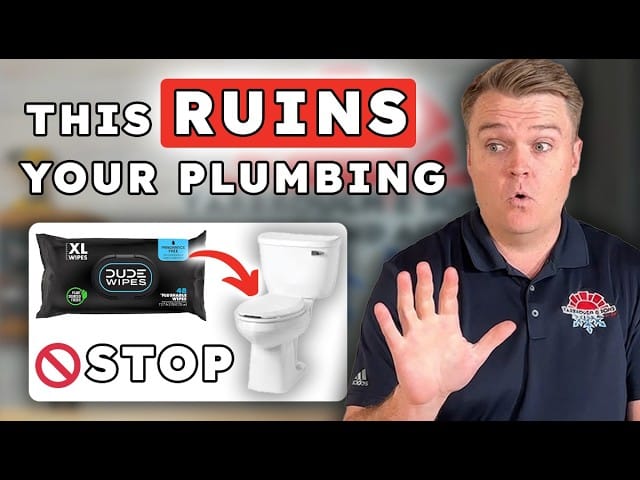
2. “Flushable” Wipes (The Ultimate Lie)
No matter what the marketing on the package claims, there is absolutely no such thing as a flushable wipe.
- The Problem: Standard toilet paper is engineered to dissolve into pulp within seconds of hitting water. Wipes—even major brands like Dude Wipes—are woven fabrics. They stay completely intact as they travel down your line. Over six months, they stack up like a warehouse inside your main sewer lateral, catching grease and causing massive, structural main-line backups. They are only “flushable” because they leave your sight when you press the handle.
- What to Use Instead: Use standard toilet paper. If you absolutely must use wet wipes, place a small trash can next to the toilet and throw them away. Never let them enter your drainage system.
3. Cheap Rubber Washing Machine Hoses
Washing machines are high-pressure water hubs often hidden away in a closet or utility room where you can’t actively monitor them.
- The Problem: Most manufacturers ship their washers with cheap, basic black rubber hoses. Over time, constant water pressure updates cause the rubber to dry rot, blister, and burst. Because it happens behind the machine, you won’t notice it until you have $5,000 to $30,000 worth of catastrophic structural water damage spreading through your flooring.
- What to Use Instead: Spend $15 at a hardware store to upgrade to a braided stainless steel water line. They thread on with the exact same “righty-tighty” hand motion but provide a bulletproof metallic shield that prevents pressure bursts.
4. Rigid Plastic Toilet Supply Lines
In the exact same vein as washing machine lines, the water connection feeding your toilet tank is a common failure point.
- The Problem: Many builders and budget installers use cheap, stiff plastic tubes to connect the wall valve to the toilet fill valve. These plastic nuts crack under the slightest stress, and the internal O-rings wear out, leading to continuous, hidden leaks behind the porcelain.
- What to Use Instead: Upgrade to a flexible, braided stainless steel toilet supply line (around $15). Note: While they look identical to washer hoses, they have a smaller diameter, so ensure you buy the model explicitly labeled for toilets.
5. Drop-In Chemical Toilet Tank Tablets
We all want to live in a utopia where toilets clean themselves, but plopping a blue or bleach cleaning tablet directly into your upper toilet tank is a massive mistake.
- The Problem: Leaving a highly concentrated chemical tablet sitting in stagnant water completely compromises the internal mechanics. The harsh chemicals aggressively eat away at the rubber flapper and the critical rubber flush-valve gasket that seals the tank to the bowl. Once those gaskets disintegrate, you’ll suffer constant tank leaks down your bathroom floor.
- What to Use Instead: Keep the chemicals out of the tank. Apply your standard toilet bowl cleaner directly into the bowl, scrub it with a brush, and flush it away immediately once a week.
Bonus: The Nightmare of Electric Tankless Water Heaters
If you want to spark absolute rage across the internet, mention tankless systems. But we have the receipts: avoid electric tankless water heaters at all costs.
If you live in a state with hard water (like Oklahoma), combining an intense electric heating element with an on-demand water path creates a localized electromagnetic field. This field causes calcium and hard minerals to cake up inside the inlet line at an alarming speed. They suffer constant warranty failures and short lifespans.
If you have access to gas, gas tankless water heaters are fantastic and highly recommended. But if you are 100% electric, stick to a high-capacity standard electric tank or an ultra-efficient heat pump water heater to avoid a multi-thousand-dollar science experiment gone wrong.
Conclusion: Buy Once, Cry Once
Plumbing isn’t flashy, but taking short shortcuts with cheap hoses, chemical shortcuts, or un-flushable fabrics will always lead to an expensive emergency call later. Invest in quality parts upfront, or partner with a team that does things right the first time.
If you are in the Oklahoma City metro area and want an honest look at your home’s plumbing health, Yarbrough & Sons is in your corner.
Struggling with an active leak or drain issue right now? Click to use our Interactive Online Estimate Tool. Trace your specific plumbing symptoms to see transparent, real-world pricing in under two minutes.
Proudly Serving Communities Throughout The Oklahoma City Area
Our Service Area
 All Service Areas