
7 Home Comfort Upgrades to Make Before an Oklahoma Summer
Homeowner Tips & News

Family Owned & Operated

Trusted & Highly Rated Service

Responsive & Timely Service
Family Owned & Operated
Trusted & Highly Rated Service
Responsive & Timely Service
7 Home Comfort Upgrades to Make Before an Oklahoma Summer
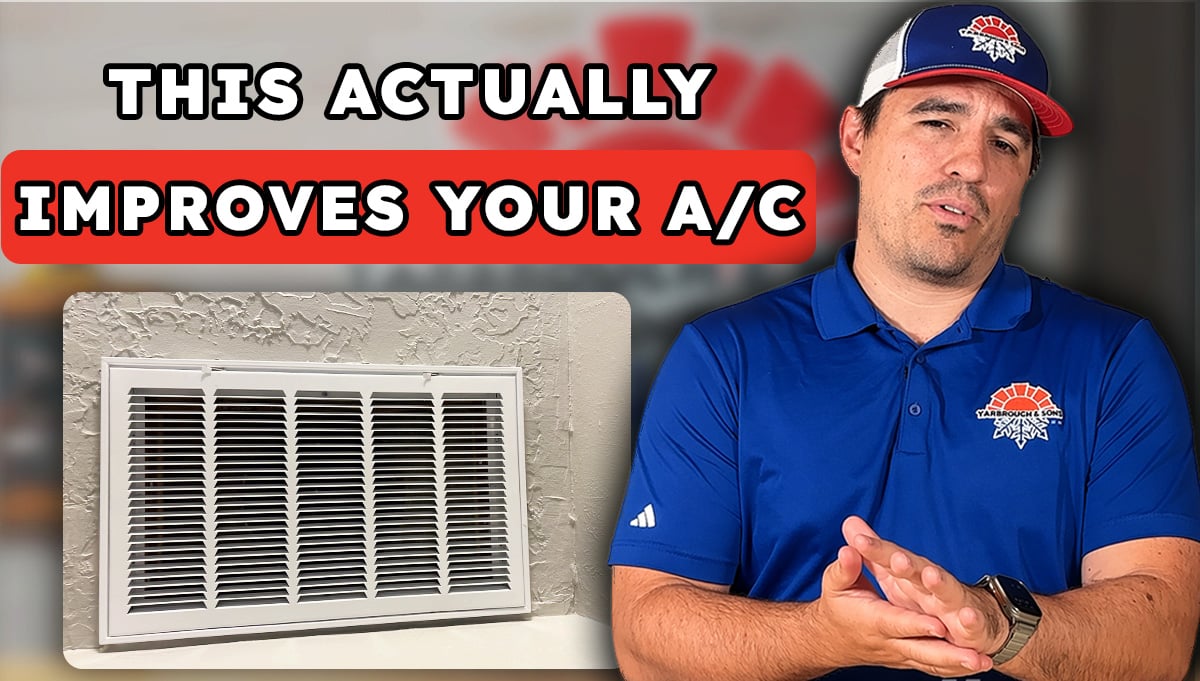
Most homeowners wait until the first 95-degree week to realize the problem isn’t that the AC quit — it’s that the house never feels right even when the system is running. One hot bedroom. Weak airflow on one side of the house. Sticky air. Dust that never settles. I’m Kolby Yarbrough with Yarbrough & Sons, and I help homeowners figure out the comfort needs in their house. The right home comfort upgrades depend entirely on which of those complaints you actually have, and the fix for your neighbor’s house is rarely the fix for yours. Here are the seven upgrades homeowners most often tell me they wish they’d looked at sooner — and how to match each one to the problem you’re feeling.
Key Takeaways
- Define the complaint before you buy anything. A hot room, high humidity, and dusty air are three different problems with three different fixes.
- The most overlooked upgrade is return air. Most homes we open up have undersized returns, and it’s a common correction we make during system replacements.
- A thermostat upgrade helps with scheduling — not airflow. It won’t fix bad ductwork, thin insulation, or equipment that can’t keep up.
- In Oklahoma summers, humidity matters as much as temperature. A house can hit the setpoint and still feel sticky.
- Ask for a full diagnostic, not a product recommendation. Don’t buy the upgrade that solves someone else’s problem.
Match the Upgrade to the Symptom
Before we walk through each option, here’s the quick-reference version of all seven home comfort upgrades. Find the row that sounds like your house, and start your research there.
| What you’re feeling | What it usually means | Upgrade to look at first |
|---|---|---|
| One bedroom gets hot, especially with the door closed | The room pressurizes and airflow backs out | Add a return air to that room |
| A whole side of the house won’t cool | Undersized, leaky, or crushed ductwork | Ductwork correction |
| House hits the setpoint but feels sticky | Moisture trapped inside a tightly sealed home | Whole-home dehumidification |
| Cool enough, but dusty, stale, and you’re sneezing | Filtration and air quality, not temperature | Indoor air quality upgrade |
| Upstairs bakes in the evening and bills keep climbing | Attic heat gain, thin insulation, or leaking ducts | Attic ventilation, insulation, and duct sealing |
| Temps swing with your in-and-out schedule | A control problem, not a capacity problem | Smart thermostat |
| You’re cooling rooms nobody lives in | The whole house runs for a few occupied rooms | Zoning — after a ductwork check |
Prefer to watch? I walk through all seven home comfort upgrades in the video below.
1. Smart Thermostat Upgrade
This is the easiest upgrade on the list, and it earns its keep when the system works fine but your household schedule doesn’t hold still. If you’re in and out of the house at odd hours, a smart thermostat gives you scheduling, consistency, and visibility — you can see what the system is doing and adjust it from anywhere.
Here’s the honest caveat: a thermostat is not a magic fix for bad airflow, poor insulation, or equipment that can’t keep up. It’s a better steering wheel, not a bigger engine. If your complaint is a hot room or sticky air, keep reading — the thermostat isn’t your problem.
2. Ductwork Correction
If one side of the house is always uncomfortable, the ductwork deserves a serious look. Undersized ducts, leaks, crushed runs, poor return air, or a bad layout can make good equipment perform badly. You can install the fanciest system in the world, but if the duct design is poor, it won’t do you much good.
Ductwork is also the most overlooked upgrade for a simple reason: you can’t see it. It’s either in the slab under the house or above your head in the attic. Out of sight, out of mind — until one wing of the house won’t cool. If that sounds familiar, start with our guide to fixing hot and cold rooms, then have a pro evaluate whether your ducts need repair, sealing, or redesign.
3. Return Air — The Most Overlooked Fix
Maybe your ductwork is in decent shape overall, but one piece of it is holding everything back: the return air. Most homes we work in have return air that’s undersized, and enlarging it is a correction we make consistently during system replacements. When a system can’t pull enough air back to the unit, comfort problems show up all over the house — stuffy bedrooms behind closed doors, a strained-sounding system, rooms that never quite catch up.
The classic example is the master bedroom. You close the door at night, and the room heats up. Why? Airflow follows the path of least resistance. The easiest way I know to explain it: think of blowing air into a Coke bottle — you can only push so much in before it backs out on you. Close a well-sealed door with supply air blowing into that room and no return path, and the room pressurizes. The supply air simply stops falling into the room. Adding a return air to that bedroom gives the air somewhere to go, so you get proper circulation all night with the door shut. It’s one of the simplest, highest-impact fixes on this list.
4. Indoor Air Quality
Summer comfort isn’t just temperature. Filtration, dust, humidity, odors, and air movement all affect how a home feels. If you’ve got standard builder-grade filtration, a couple of pets, and kids running in and out all day bringing outside dust with them, you can be perfectly cool and still sneezing constantly. That’s a terrible way to live in your own house.
Upgraded whole-home filtration and air quality systems turn the house into a respite from Oklahoma’s allergy seasons — you come home, you stop sneezing, you sleep better, and you actually recover before heading back outside. If your house cools fine but the air feels dirty and stale, an air quality upgrade will do more for you than lowering the thermostat ever will.
Not sure which upgrade fits your house? Get a real number in seconds with our instant online estimate, or call (405) 960-3470 and we’ll talk through what you’re feeling at home.
5. Whole-Home Dehumidification
Of all the home comfort upgrades on this list, dehumidification is the one Oklahoma homeowners underestimate most. We’ve had rainy stretches this summer, and you can have a perfectly nice temperature on the thermostat — but if indoor humidity is sitting at 70 percent, it’s no fun being in that house. Humidity is honestly one of the hardest comfort problems to solve, and newer homes make it harder: they’re built tighter and less leaky for energy standards, which is great for your bills but traps moisture inside.
The best way I know to describe it: ever walked into a walk-in cooler? It’s cold — and yet it feels like moisture is settling on your skin. A humid house does a milder version of the same thing. The air is technically cool, but it feels wet. A whole-home dehumidifier works alongside your AC to pull that moisture out. For the full breakdown of why this happens here, read our post on keeping your home comfortable in Oklahoma humidity.
6. Attic Ventilation, Insulation, and Duct Sealing
You can own the best system in the world, but if the attic isn’t vented properly and the ceiling isn’t insulated well, the comfort you’re paying for is leaving through the sheetrock. The hottest attic I’ve ever worked in was 160 degrees — you don’t work in that space for very long — and attics like that are often hotter than the air outside. Without adequate insulation between you and that heat, your AC is fighting a losing battle all afternoon. The U.S. Department of Energy’s insulation guidance is a good starting point for what your ceiling should have; many Oklahoma attics fall well short of it.
While you’re up there, check the duct sealing too. In older homes, sealant that was fine ten years ago can corrode and come apart, and suddenly you’re paying to air-condition the attic. Your HVAC tech would thank you — your energy bill would not. Make sure every duct is connected and sealed so the air you’ve paid to cool ends up in your living space, not above it. That combination — venting, insulation, sealed ducts — is where the real summer savings live.
7. Zoning (For the Right House)
Zoning is the tricky one. Most homes don’t need it, and people get some outlandish ideas about what a zoned system does. It’s not a way to shut half the house off and supercharge the other half. But in the right situations, zoning genuinely helps: west-facing rooms that heat up toward evening as the sun sets, long floor plans where one end struggles even with correctly sized equipment, or empty-nesters with guest rooms and kids’ rooms nobody lives in anymore. In that last case, zoning lets you relax the temperature in the unused wing and concentrate comfort where you actually live.
One serious caution: zoning can be hard on your HVAC system if the ductwork isn’t sized to handle zones closing off. Shutting down part of the house raises static pressure on the system, and airflow is everything. I treat zoning as a possible upgrade, not a first resort — double-check, triple-check, quadruple-check the duct sizing before anyone installs it, and know that there are often cheaper routes to solving the same comfort problem. If you’re weighing equipment options at the same time, our post on variable capacity systems covers another way to even out room-to-room comfort.
How to Choose the Right Home Comfort Upgrades
Don’t buy the upgrade that solves someone else’s problem, and be suspicious of anything pitched as a fix-all. Homes are built differently, and your comfort needs are different from your neighbor’s, your friend’s, and your grandma’s. The home comfort upgrades worth your money are the ones matched to your specific complaint — so before you spend anything, take stock of what’s actually bothering you, room by room.
Then, when you talk to an HVAC team, ask for a full diagnostic of the house — not just a product recommendation. A good comfort advisor should want to understand the problem before naming the solution. That one conversation is the difference between an upgrade that transforms your summer and an expensive gadget that doesn’t touch the real issue.
Frequently Asked Questions
What’s the most overlooked home comfort upgrade?
Return air. Most homes have undersized returns, and it’s one of the most common corrections we make during system replacements. If a bedroom gets stuffy with the door closed, adding a return to that room is often a simple, high-impact fix.
Will a smart thermostat fix a hot room?
No. A thermostat improves scheduling, consistency, and visibility, but it can’t overcome bad airflow, undersized ductwork, or thin insulation. Hot rooms are almost always an airflow or heat-gain problem, not a control problem.
What should indoor humidity be in an Oklahoma summer?
A comfortable target is 40 to 60 percent, and in summer you want to be toward the lower half of that range. If your home is sitting near 70 percent, the air will feel sticky no matter what the thermostat says, and a whole-home dehumidifier is worth a serious look.
Does my house need zoning?
Probably not — most homes don’t. Zoning earns its place in specific cases, like west-facing rooms that overheat in the evening or homes with entire areas that sit unused. Before installing it, have a pro verify the ductwork can handle zones closing off, because zoning an undersized duct system creates static pressure that’s hard on the equipment.
Ready to Make This Summer Comfortable?
If you’re in the Oklahoma City metro — Blanchard, Norman, Moore, Edmond, Yukon, Newcastle, Mustang, and the surrounding communities — we’d love to be your team. Yarbrough & Sons has been keeping Oklahoma homes comfortable since 1988, with more than 10,000 installs behind us. Whether you need one return air added or a full slate of home comfort upgrades, every project starts the same way: a real diagnostic of your house and your complaints, not a one-size-fits-all pitch.
Get a straight answer on any comfort upgrade
Call (405) 960-3470 or get an instant online estimate in seconds.
Proudly Serving Communities Throughout The Oklahoma City Area
Our Service Area
 All Service Areas